

Building lighting is to use the expressive power of lighting to reshape the image of the night landscape of the building

1. Highlight the main light and take into account the auxiliary light
This is to use the main light to highlight the important parts of the building, and use the auxiliary light to illuminate the general parts, so that the lighting has a sense of hierarchy. The ratio of main light and auxiliary light is generally 3:1. This can not only show the main center of the building, but also show the overall image of the building.
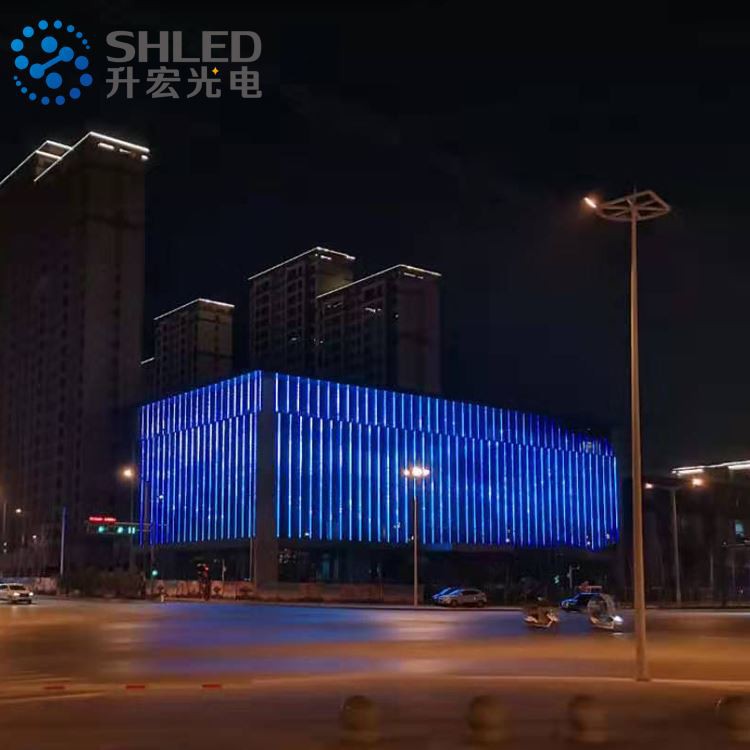
2. Projection direction
There is a certain relationship between the main projection direction of the floodlight and the main line of sight. In order to obtain a good light and shadow shape, the corresponding optimal projection direction should be adopted for buildings of different sizes and building parts with different shapes.

3. Roof Profile
The sloping top, the round arch, the glazed tile roof and the light eaves of the building are the essence of different architectural styles. Illuminating them with lights can play a finishing touch in the lighting of the building. When the spotlight is placed more than twice the distance from the roof, the beam can illuminate the roof; when the distance is shorter, use the narrow light distribution spotlight to project from the low-rise flat roof or the flat roof close to the building. For larger and higher roofs, low-power PAR lamps, etc. should be used scattered around the cornices and behind the roof windows to illuminate the roof evenly.
4. Clever use of backlighting and background lighting
For example, for the lighting of the colonnade and the green trees in front of the wall, install lights on the inside of the colonnade or behind the green trees to illuminate the background, separate the colonnade and the green trees from the background to form a silhouette, and the lighting effect of the building is better than ordinary The cast light is better and more distinctive.
For the lighting of commemorative public buildings, office buildings or buildings with independent styles, the main tone is solemn, concise and simple, and it is generally not suitable to use color light. When necessary, only low-chroma shades can be used locally as a foil. For commercial and cultural entertainment buildings, chromatic lighting can be used appropriately, and the chroma can be improved a little, which is conducive to creating a relaxed, lively and lively atmosphere.