

With the diversified development of urban functions, various large sports venues, performance centers, conference and exhibition halls and other public venues continue to rise, with increasingly diverse architectural styles, large volumes, and complex functions. How to inject vivid visual recognition, enhance nighttime identification and cultural atmosphere into these venues through high-quality outdoor facade lighting has become a key part of urban lighting engineering.
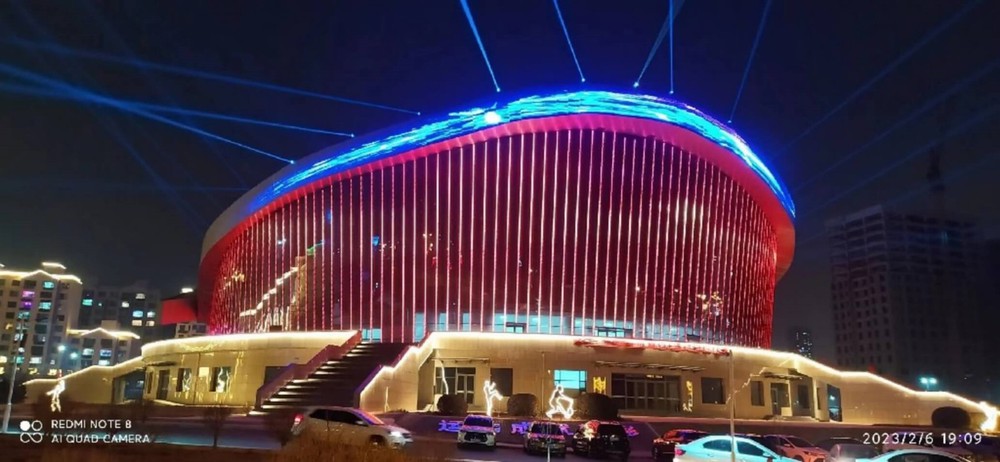
Early stage: Planning positioning and scheme planning
1. Clarify project objectives and positioning
Types of project venues (such as sports fields, exhibition centers, performing arts theaters)
Usage and audience structure: Are there any major events, night performances, or festive events
Urban location and architectural style: whether it is a key urban area or transportation hub
2. On site research and environmental analysis
Building structure analysis: materials (glass curtain wall, metal facade, concrete), shapes (irregular structure, facade nodes, protruding structure)
Environmental element analysis: surrounding buildings, roads, vegetation, advertising carriers, skyline control
Illuminance status and power supply conditions: whether there are independent lighting circuits, substation equipment, and control networks
3. Lighting style and effect positioning
Artistic: Do you need interactive lighting, projection mapping, and dynamic interpretation
Practicality: Whether to balance safety and directional functions
Energy saving: Low power, high brightness lighting fixtures, intelligent control system
4. Create design blueprints and concept animations
Using modeling software (SketchUp, 3D Max) for effect simulation modeling
Simulate illuminance using DIALux or AGI32 to generate a basic lighting data report
Provide a demonstration video of the project's effectiveness to facilitate intuitive understanding by property owners and government approval agencies
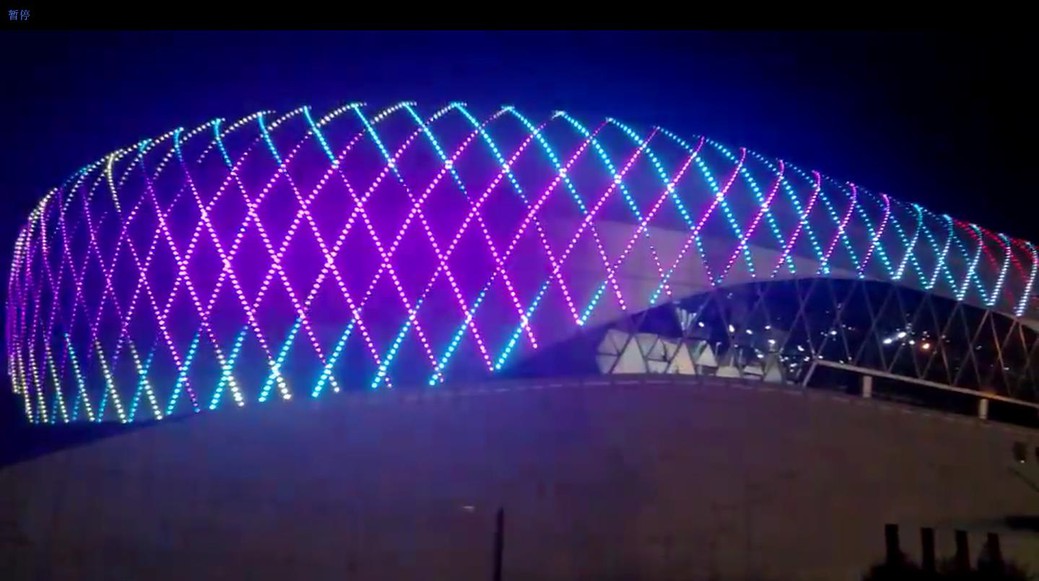
Mid stage: Design deepening and product implementation
1. Zoning lighting strategy design
Front facade (main visual area):
① Create a large-scale dynamic visual media facade using video light strips or grid screens;
② The main entrance area is equipped with a combination of high brightness line lights and wall wash lights, highlighting the entrance signage and welcoming feeling;
Secondary facade (both sides/back):
① Using wall washers light to evenly outline the contours and enhance overall contour recognition;
② Combining point light sources for star shaped decoration, reflecting a sense of hierarchy;
Roof edges and structural lines:
① Use led pixel linear lights (such as 16 segments per meter) to create dynamic flow effects that are linked to the building structure;
Columns, column caps, and nodes:
① Small angle floodlights accurately project node areas, creating a sculptural feel;
LED screen integration: If conditions permit, LED display screens can be installed in the north-south direction of buildings or at areas where people gather for event promotion and urban interactive information dissemination.
2. Lamp selection and control system construction
Use high brightness, long-life, IP67 and above protection level lamps to adapt to long-term outdoor operation;
Equipped with a control system that supports the DMX512/SPI/ArtNet control protocol, featuring modules such as time control, remote control, and music interaction;
Considering system redundancy and scalability, supporting the upload and real-time control of customized content for future venue activities;
3. Electrical system design
Design partitioned power supply circuits to prevent overall failure caused by single area faults;
Ensure power supply redundancy and reserved transformer load;
The control system is interconnected with the main control room network and compatible with BMS/stage control and other system interfaces;
4. Drawing and construction preparation
Prepare detailed construction drawings: lighting diagram, wiring diagram, control wiring diagram, lighting fixture positioning diagram;
Provide bracket installation structure design and cooperate with curtain wall construction units for embedded pre embedding treatment;
The factory cooperates in mold opening and customizing lighting structures to adapt to special nodes or irregular building areas;
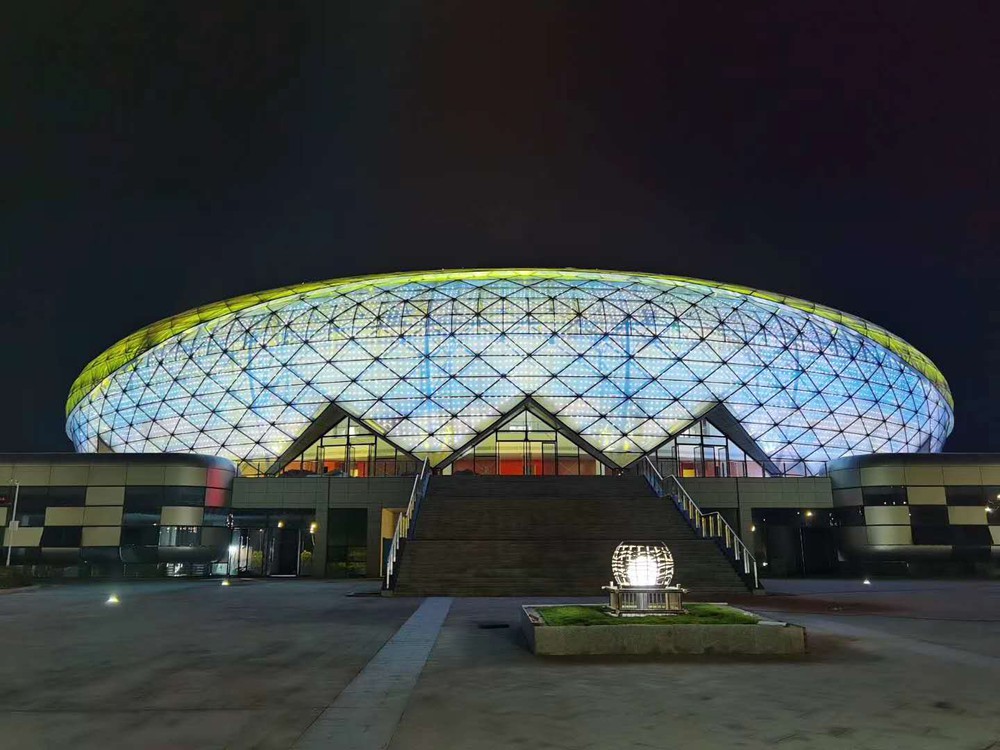
Late stage: installation, debugging, and operation and maintenance management
1. Installation scheduling and construction management
Coordinate with nighttime construction arrangements (to avoid daytime interference with the daily use of the venue), and organize the pace of regional progress reasonably;
A professional construction team conducts standardized wiring, fixing, and debugging, strictly controlling the consistency of the direction and angle of each node's lighting fixtures;
Control system partition debugging, gradually going online to ensure stability
2. Lighting debugging and lighting effect programming
Using lighting programming software for animation import and lighting channel mapping
Set up different operating modes for venues in different time periods: daily, holidays, major events, shutdown for energy conservation, etc
Integrating sound system and stage lighting to achieve integrated performance of light shows
3. Post operation and technical support
Provide system maintenance protocol: regularly check the aging of lighting fixtures and upgrade the firmware of control equipment
Set up remote control permissions for the backend management end and APP for the operator
Training venue management process to ensure daily scheduling and emergency response

Empowering the core advantages of SHLED
1. With over 16 years of experience in designing and implementing large-scale lighting projects, familiar with the demand characteristics of sports and cultural tourism projects;
2. Independently develop LED video light strips, led point lights, wall washers light, linear lights outdoor and other products to adapt to irregular building structures;
3. The project management team has international engineering experience in multiple locations and is familiar with regulations and standards in Saudi Arabia, the United Arab Emirates, Singapore, and other places;
4. We have an intelligent control system development team that can customize a visual control platform and dynamic lighting program according to customer needs;
5. Support remote debugging and technical maintenance of control systems in different locations, saving customers operation and maintenance costs;
6. The product has passed international certifications such as CE, CQC, RoHS, ETL, etc., and meets global project standards.
Conclusion
Sports centers, exhibition halls, theaters, and other venues are not only functional buildings, but also carry important missions for urban cultural dissemination, brand image display, and public participation and interaction. Through a systematic and refined outdoor facade lighting solution, not only can the aesthetic of buildings be enhanced at night, but also the operational efficiency and interactive experience of venues can be improved through intelligent control systems. Shenghong Optoelectronics is committed to becoming the preferred partner for global venue lighting projects with its profound industry accumulation, strong product research and development capabilities, and comprehensive project delivery capabilities.